


The complete guide
The Buyer's Guide to Gravity Fed Water Filters
The problem with tap water that nobody mentions
Tap water in most towns is perfectly fine to drink. That is not the issue. The issue is that a lot of it tastes of chlorine, and once you notice that taste you cannot un-notice it. It shows up in a glass of cold water, it shows up in tea, and it shows up in the bottom of a coffee plunger.
The usual response is a plastic jug from the supermarket. Those work, sort of, but they hold about a litre and a half, the filter is a small cartridge, and in a house with three or four people you end up refilling it constantly. The other response is an under-sink system, which means a plumber, a hole in the benchtop or cabinet, and a job you cannot do in a rental.
A stainless steel gravity water filter sits neatly between those. It holds enough water to be useful, it needs no tools and no trades, and you can pick it up and take it with you.
How a gravity fed filter actually works
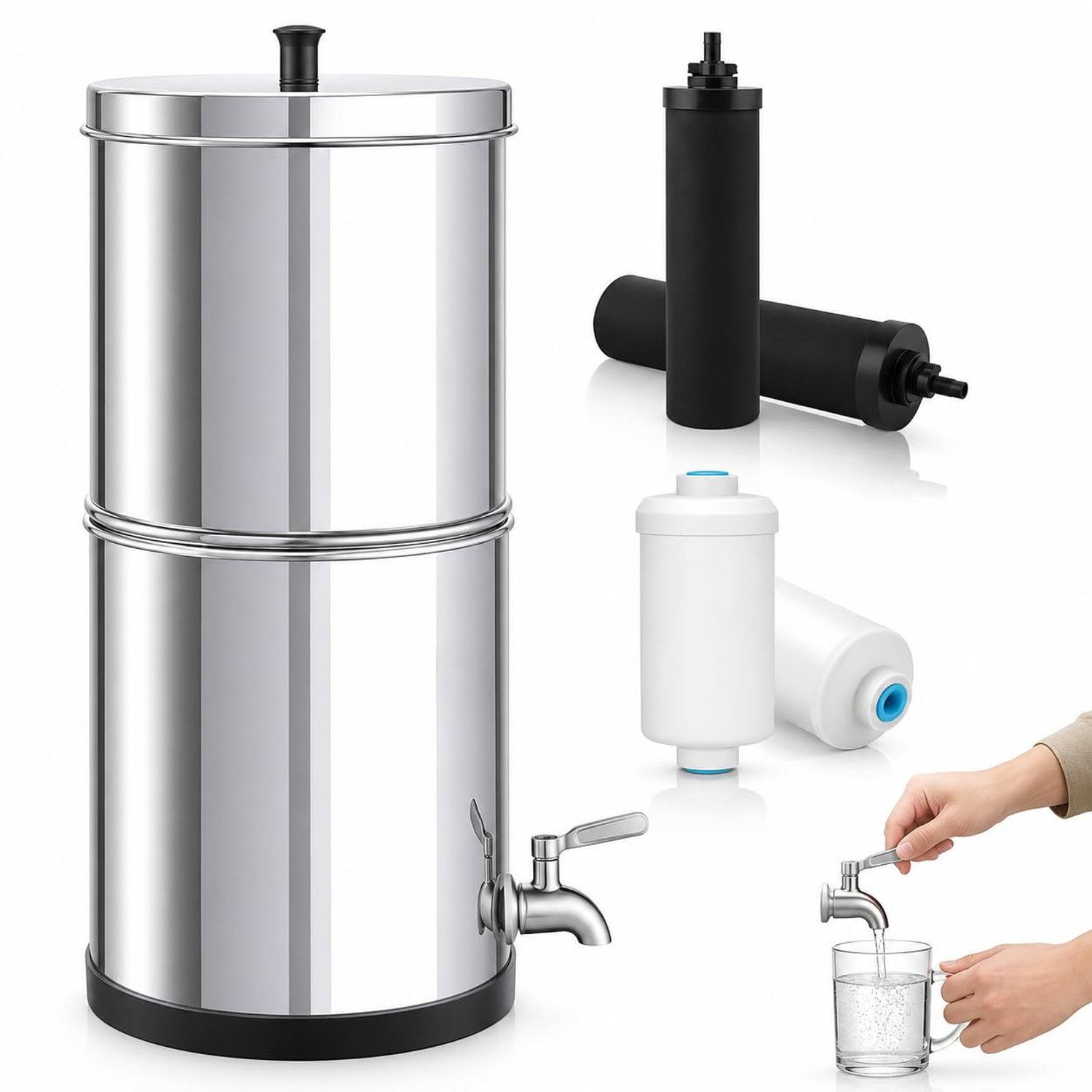
There is almost nothing to it mechanically, which is part of the appeal. The unit is two chambers stacked on top of each other. The top one is open and you pour water into it. The bottom one is sealed and has a spigot on the front.
Between the two chambers sit the filter elements. This unit comes with two black carbon filters, each carrying a 0.01 micron ultra filtration membrane. Water in the upper chamber is pulled down through those elements by its own weight, and it collects in the lower chamber below. The maximum flow rate quoted is about 15.1 litres per hour, so a full batch does not take long.
Because gravity is doing the work, the flow is faster when the top chamber is full and slows as it empties. That is normal. There is no pump to fail, no electronics, and nothing that stops working when the power goes out.
What the filter is designed to do is reduce chlorine taste and odour and sediment. That is the claim, and it is worth being clear about it, because this category attracts a lot of overblown marketing. If you want a change in how your water tastes and smells, this is the kind of product that addresses it. If you are chasing something else, read the specs carefully first. The maker also notes that this type of filtration does not lower the TDS reading, and it is not a water softener.
Why stainless steel over plastic
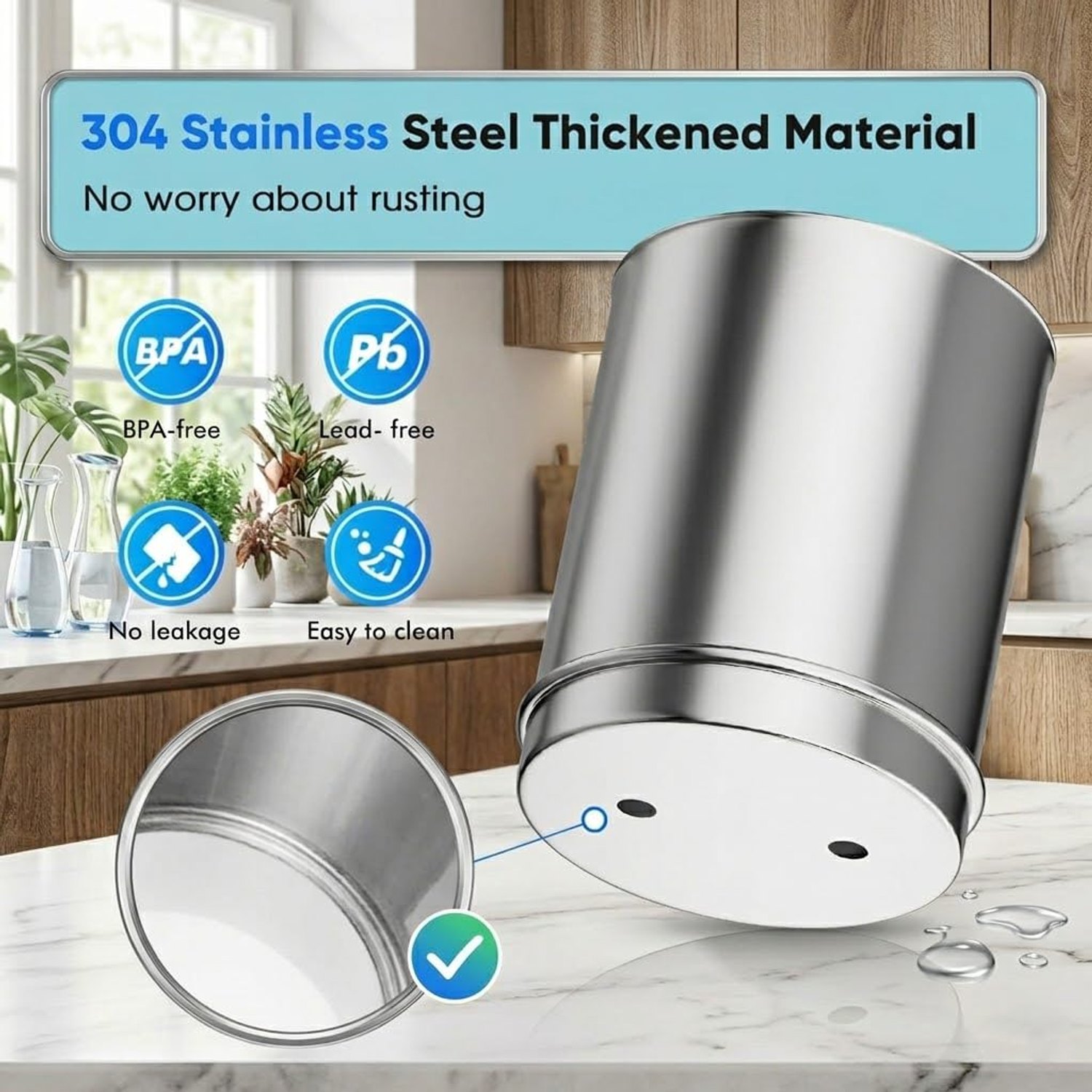
The chambers here are 304 stainless steel, which is a food-grade grade used widely in kitchens. A few practical reasons it matters.
Stainless does not take on smells. Plastic containers that hold water for long periods can start to carry a faint taste, particularly if they sit in a warm spot. Stainless does not do that.
It also does not stain. If you have ever had a plastic jug go cloudy or pick up a tea-coloured tinge, you know the annoyance. A quick wipe with a soft cloth and some mild dish soap keeps stainless looking the same as the day it arrived.
And it is more durable. At 5 kg empty, this is a solid piece of kit rather than something that flexes when you lift it. The fitted stainless steel spigot and the non-slip stand come in the box too, so there is nothing extra to source.
Who this suits
Renters are the obvious group. No drilling, no plumbing, no permission needed from a landlord. It goes on the bench on moving-in day and comes off the bench on moving-out day.
Households in older flats and small kitchens are another. If the cupboard under your sink is already full of pipework and cleaning bottles, an under-sink filter is a non-starter. A countertop unit solves that by not needing the space at all.
People with holiday houses and caravans find gravity units handy because there is no reliance on power. Keep in mind this one is for drinkable mains water, so it is about improving the taste of a town supply, not making an untreated source drinkable.
Finally, anyone who drinks a lot of tea or coffee. That is where the difference tends to be most obvious.
Working out whether it fits
Measure first. This unit is about 50 cm long, 30 cm wide and 22 cm high. The height is the one people get caught out by, because you need clearance above the lid to lift it and pour a jug of water in. If you have overhead cupboards sitting low over your bench, check there is enough room, or plan to stand it on a table or an island instead.
Then think about capacity. The 2.25 gallon capacity works out at roughly 8.5 litres. For one or two people that is comfortably a day's drinking water with room to spare. For a family of four or five who drink a lot of tea, expect to refill it once a day.
Also think about where it will live permanently. Filled with water, it is heavy, so you want a spot you are happy with rather than something you will be shuffling around. Leave a gap in front of the spigot so a tall bottle or a jug fits underneath.
Looking after it
Setup is straightforward. Rinse both chambers, fit the filter elements and the spigot as the instructions describe, then run one batch through and tip it away. After that it is just pour and wait.
For cleaning, warm water, mild dish soap and a soft cloth is all you need. Dry the outside afterwards so you do not get water spots on the steel. Keep steel wool, bleach and scouring powders away from it. They scratch the finish and can damage the spigot washer.
Try to use the filtered water within a day or two rather than letting a full chamber sit for a week. If the unit has been idle for a while, say after a holiday, empty it, give both chambers a rinse and start fresh.
The filter elements are the part you replace. The stated filter life cycle is six months. Put a note in your phone calendar when you fit a new set, because flow rate dropping off is a late signal and you are better off working to the schedule.
A note on what gravity filters do not do
It is worth saying plainly. A gravity filter is not a treatment system for water you would not otherwise drink. Use this one with drinkable mains (town) water. It is also not a softener, and the maker states it does not lower the TDS value. Buying with a clear picture of the job it does means you will be happy with it six months from now.
The short version
If your tap water tastes of chlorine and you cannot or do not want to plumb something in, a countertop gravity unit is the practical answer. This one gives you two 304 stainless steel chambers, two black carbon filter elements with a 0.01 micron ultra filtration membrane, a fitted spigot and a stand, all in one box.
It runs on gravity, so there is no power bill and nothing to break down. It holds about 8.5 litres, it fills at roughly 15.1 litres per hour at most, and the elements last six months before they need swapping.
Measure your bench height, decide whether 8.5 litres covers your household, and if both answers work, this is a straightforward bit of kit that will quietly improve the taste of every cup of tea you make.