

The complete guide
Inline Fridge Water Filters, A Buyer's Guide
The problem with fridge water
Fill a glass from the fridge door and you often get a faint swimming pool smell. It is not imagined. Chlorine is added to mains supplies as part of normal treatment, and the amount varies by season, by suburb and by how far your house sits from the treatment plant. Some weeks you barely notice. Other weeks the first mouthful of water tastes like a hose.
The same thing shows up in ice. Ice sits in the freezer for days absorbing whatever is around it, and if it was made from water carrying a chlorine note, that note ends up in your drink. People often blame the freezer for the taste of their ice when the water line is the real source.
An inline cartridge works on that problem at the point it matters, which is just before the water reaches your appliance. The carbon media inside is designed to reduce chlorine taste and odour. That is a narrow job, and it is worth being honest about the limits: this is a taste and smell improvement for water that is already drinkable, not a treatment for water of unknown quality.
How an inline filter works
Activated carbon has an enormous amount of surface area packed into a small volume. Water moving slowly through it gives dissolved compounds a chance to stick to that surface instead of carrying on into your glass. The process needs contact time, which is why cartridges are long and narrow rather than short and fat, and why pushing water through too quickly reduces how well it works.
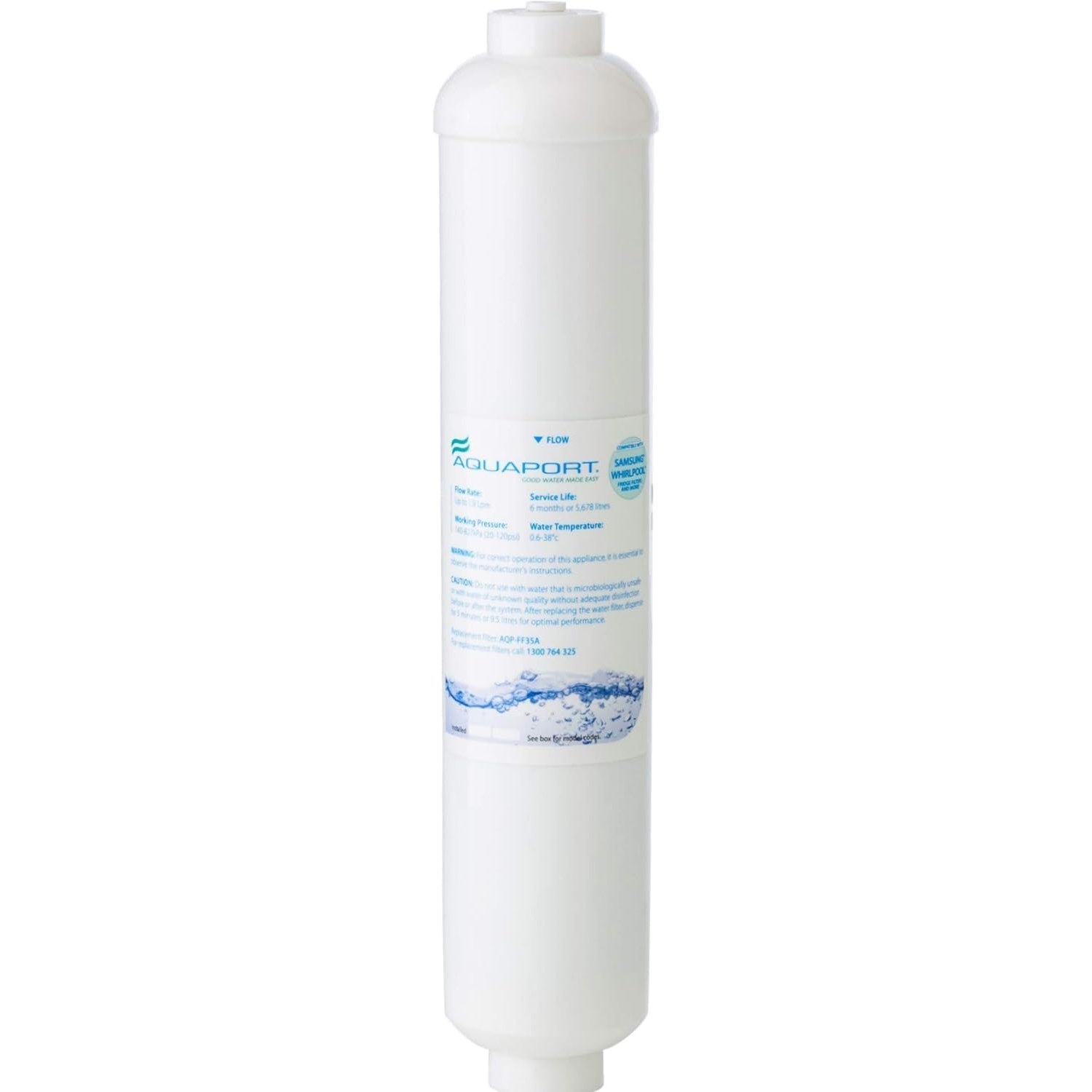
This cartridge is 306 mm long and about 6 mm across, weighing 0.32 kg. That shape is designed to let water travel the length of the media before it leaves. There are no moving parts and nothing to plug in. The pressure already in your mains supply does all the work.
Because the media gets used up, a carbon cartridge has a finite working life. Once the surface is loaded, water passes through without much happening to it. You cannot see this from the outside, which is why replacement runs on a schedule rather than on appearance. Follow the maker's instructions that come with the product.
External versus internal
This is the point that trips people up most often, so it is worth being clear. An external inline filter sits in the water line behind or under the appliance. An internal filter clips into a housing built into the fridge, usually behind a grille at the base or inside the fridge cavity. They are different products and one does not substitute for the other.
If your fridge has an internal filter housing, this cartridge will not go in it. What an external cartridge can do in that situation is treat the water before it ever gets to the appliance, which some households prefer because the cartridge is easier to reach. If your fridge has no internal housing at all, and plenty do not, an inline filter on the supply line is the normal way to add filtration.
Check your appliance before you order. Pull the fridge out, look at where the water line connects, and see whether there is a filter housing anywhere in the appliance. Five minutes of looking saves an awkward conversation later.
Who it suits
Households on mains water who want better tasting water from a plumbed fridge are the obvious fit. If your fridge dispenses water or makes ice from a connected line, this cartridge can sit in that line.
It also suits people who have inherited a plumbed fridge with no filtration and do not want to pay for an appliance specific part. An inline cartridge is the general purpose answer for a plumbed water line, and finding the best inline water filter for fridge use is usually a question of space and fittings rather than anything exotic.
It is not the answer for everyone. If you are on tank water, bore water, or anything you have not had assessed, filtration needs to be designed around what is actually in the supply, and a taste and odour cartridge is not that. Get local advice first.
Choosing and fitting
Space is the first consideration. Measure the gap between the back of your fridge and the wall, and remember you need room for the fittings on each end of the cartridge plus a gentle curve in the tubing. A long thin cartridge like this one is easier to place than a canister, but it still needs somewhere to live.
Think about access too. The best under bench inline filter position is often under the sink rather than behind the fridge, because you will be back there at every change. If the cold supply branches under the sink, that is a sensible place to break into the line. You can then forget about it until the next swap, and the swap is a two minute job instead of a furniture moving exercise.
Fittings matter. Water lines come in different diameters and connection types, and an inline cartridge has to match what you have. If you are not sure what is on your line, take a photo and ask. Getting this right before you start is far easier than discovering a mismatch with the water off and the fridge in the middle of the kitchen.
Fit the cartridge the right way round. The body carries a flow arrow and it should point towards the fridge. Backwards installation reduces the contact time the media needs.
If you are comfortable isolating a water supply and working with compression or push fit connections, this is a job many people do themselves. If not, a plumber will handle it quickly. The risk with any water line work is a slow leak behind an appliance where nobody sees it, so check your joins over the first day or two.
Looking after it
Keep the cartridge sealed in its wrapper until you are ready to fit it. Carbon media is best stored dry and out of the sun.
Flush the new filter properly. Run water through the line for a few minutes and throw away the first several glasses. Fresh carbon sheds fine black particles when it first gets wet, and the water may look grey or carry an odd taste. That clears quickly and is normal with any carbon cartridge.
Note the date somewhere you will see it. A marker on the cartridge body, a note in your phone, a line on the kitchen calendar. All of these beat trying to remember when you last changed it. Buying a spare at the same time means you are never caught waiting on a delivery.
Watch for two signs between scheduled changes. A return of chlorine taste suggests the media is loaded. A slowing flow at the dispenser suggests the cartridge is restricting the line. Either is a reason to check the date.
If you are going away for a long stretch, shut the water off at the valve. When you come back, flush the line well before drinking. Water that has stood still for weeks is best replaced regardless of what filter is in front of it.
The short version
This is an external inline cartridge for the water line behind a fridge, using activated carbon designed to reduce chlorine taste and odour in drinkable mains water. It is 306 mm long, about 6 mm across, weighs 0.32 kg and comes as a single unit.
It does not replace a cartridge that sits inside the fridge. It is for mains water, not untreated supplies. It is a consumable, so plan on replacing it on the maker's schedule.
Measure your gap, check your fittings, fit it the right way round, flush it well, and write the date down. Do those things and you get water that tastes like water.