


The complete guide
Benchtop Reverse Osmosis Buying Guide
The problem with the water you already have
Most mains water is fine to drink and still tastes like something. There is the chlorine note that turns up strongest right after the network gets flushed. There is the flat, slightly metallic edge that shows up in a cold glass but hides in a cup of tea. There is the film on top of the kettle. None of it stops you drinking the water. It just means you often choose not to.
The usual fixes have a catch. A jug filter is cheap and slow and never holds enough. An under-sink reverse osmosis system does serious work but needs a plumber, a hole in the benchtop for the dedicated tap, and a landlord who says yes. If you rent, flat with others, or just do not fancy cutting into the cabinetry of a kitchen you like, that option quietly disappears.
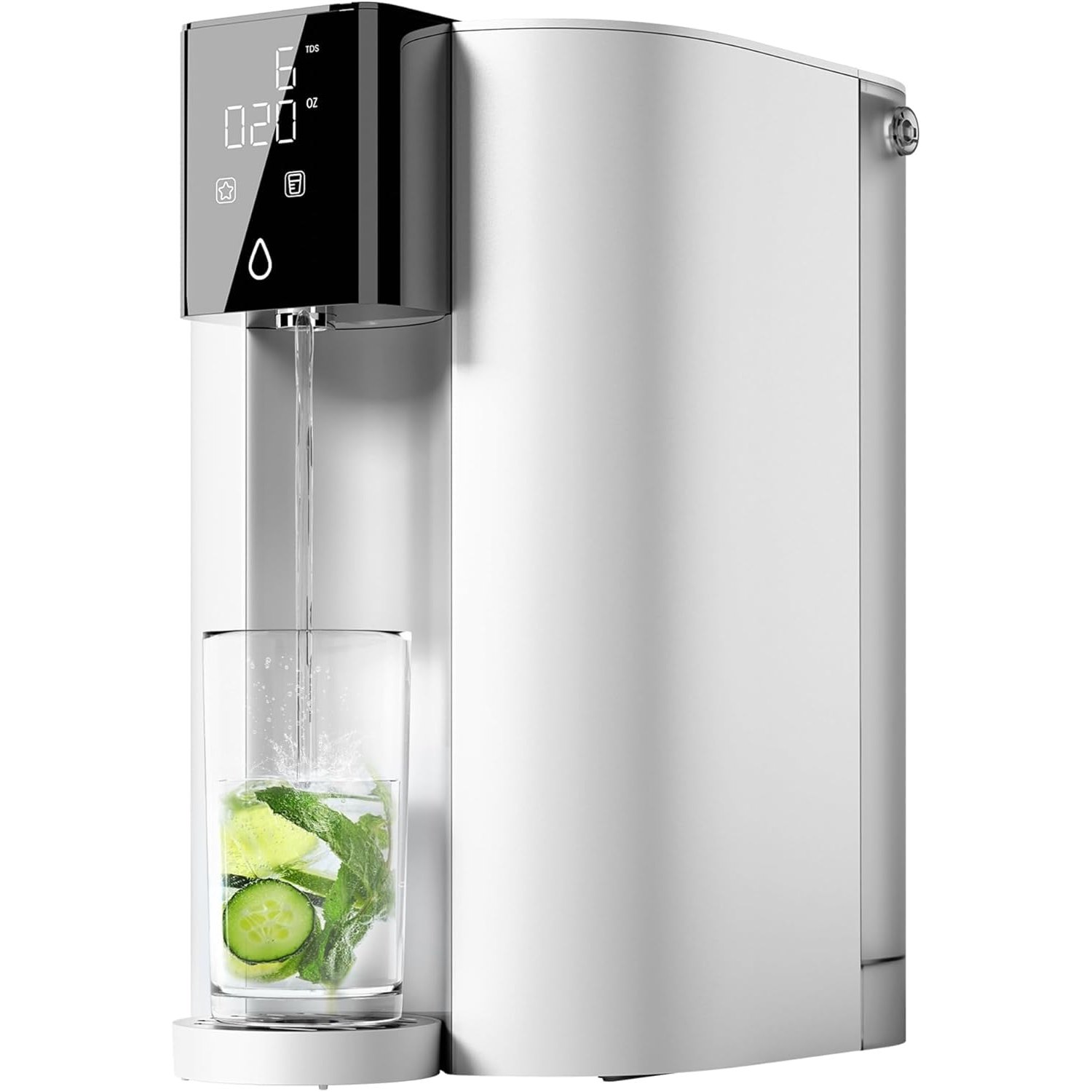
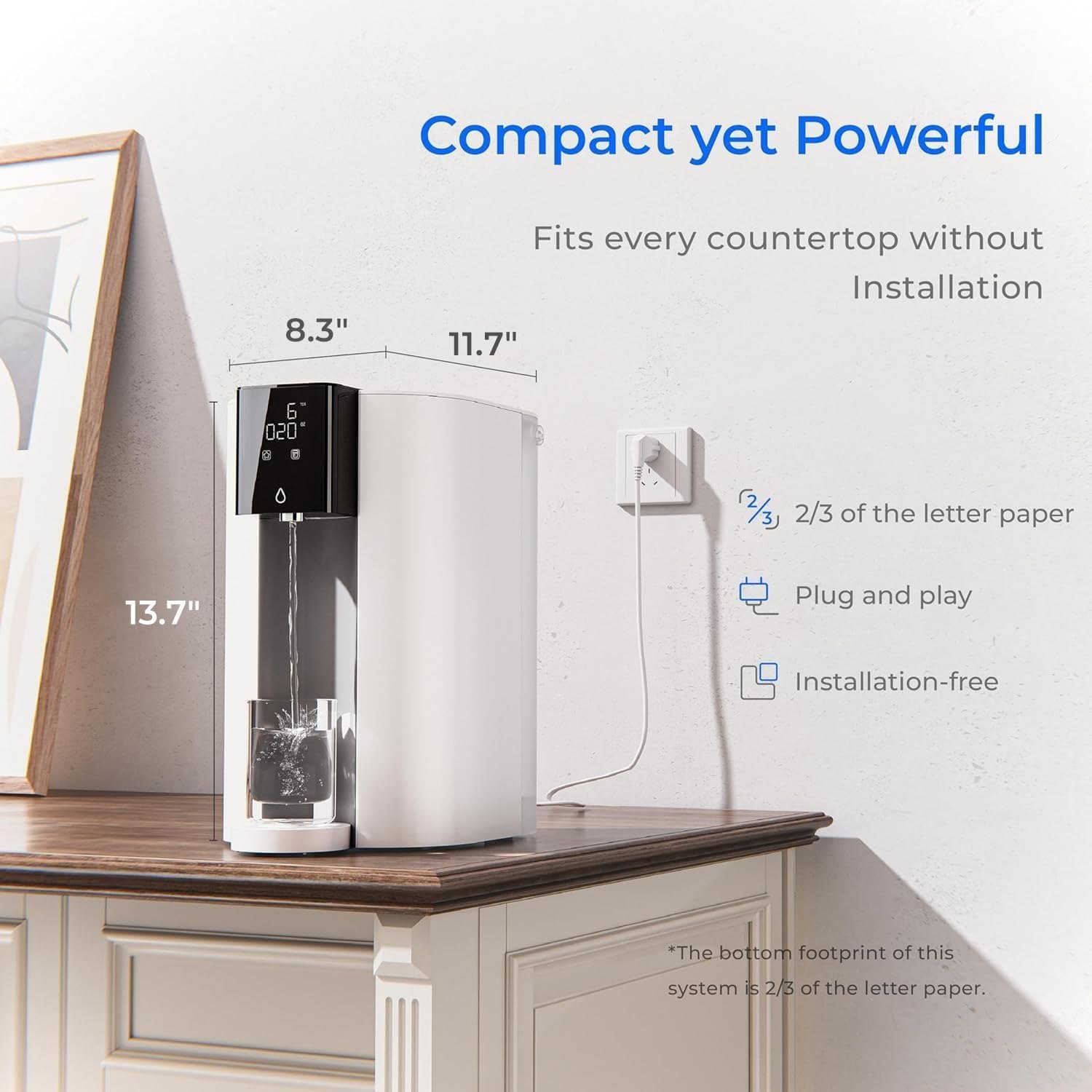
A benchtop reverse osmosis system is the middle path. It does the same style of filtration as the plumbed version, but it sits on the counter and plugs into a power point. You fill the tank, press the screen, and get filtered water into a pitcher. Nothing permanent happens to your kitchen.
How reverse osmosis actually works
Reverse osmosis is a pressure process. A pump pushes water against a membrane with openings so small they are measured in fractions of a micron. This unit uses a membrane rated to 0.0001 micron. Water molecules make it through. A lot of what was dissolved alongside them does not, and gets carried off to the waste side instead.
That is why every RO system produces reject water. It is not a fault, it is how the membrane keeps itself from clogging. The number to watch is the pure-to-drain ratio, which tells you how much filtered water you get versus how much goes down the drain. This system runs at 3 to 1, which is efficient for a benchtop unit.
A membrane on its own would not last long. Sediment and chlorine would chew through it. So this system runs six stages in total, with pre-filtration designed to reduce chlorine taste and odour and sediment before the water reaches the membrane. The stages after the membrane tidy up the result before it reaches the pitcher. All six live in one composite cartridge that twists off in a few seconds.
What the screen does for you
Plenty of filters leave you guessing. You know roughly when you bought it and roughly when it is due, and you hope for the best. The touch screen here replaces guessing with two numbers.
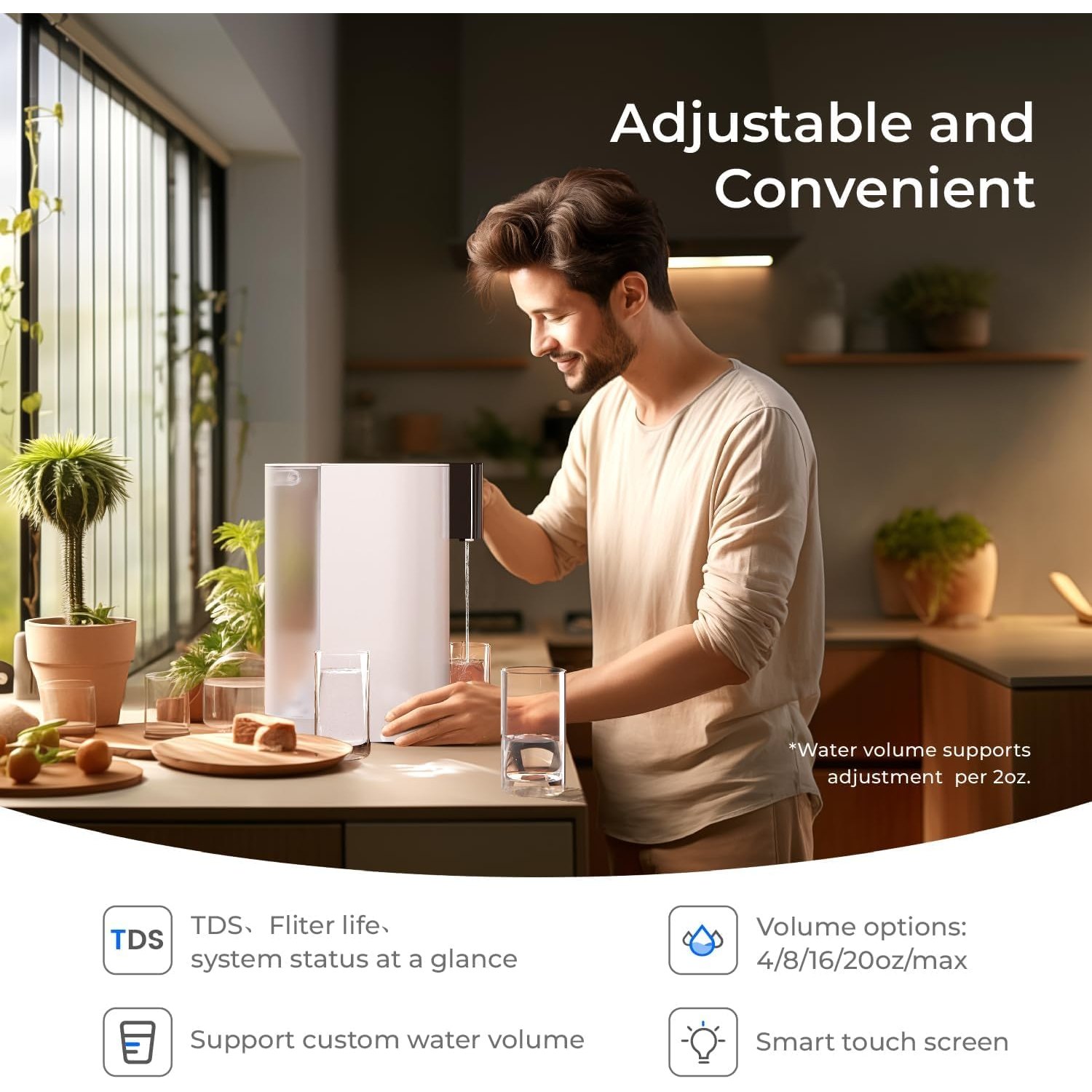
The first is a real-time TDS reading. TDS means total dissolved solids, and it is a broad measure of how much dissolved material is in the water, in parts per million. It will not tell you exactly what is present. It will give you a trend, and a trend is enough for most households to spot when something has changed.
The second is filter life. The unit tracks how much work the cartridge has done and prompts you before it runs out of useful service. The cartridge is rated for up to 12 months, though real life depends on how much you run and what your supply is like. If you are hunting for the best water filter with TDS display, the value is not the gadget factor, it is that you stop having to remember.
Five volume settings round it out. Choose a pour size for a glass, a mug or a bottle, start it, and walk away. It stops on its own.
Who this suits
Renters, first and most obviously. You cannot modify plumbing you do not own, and a benchtop unit sidesteps that entirely. The same logic applies to apartments with shared services, to studios, and to anyone in a short lease where a permanent install makes no sense.
Offices and small workplaces are the second group. A plug-in system in a shared kitchen means no fit-out approval, no contractor and no disruption. It also moves with you if the business changes address.
Small households work well with it too. The pitcher holds about 4.2 litres, which covers a day of glasses and refills for one or two people without a second thought. Larger families can run it more often, it just means more trips to the feed tank.
There are people it does not suit. If you are on bore, well or tank water, this is not the product. It is made for drinkable mains or town supply. The same goes for supplies above 500 ppm TDS. And if you genuinely have cabinet space and a plumber on hand, a plumbed system will spare you the refilling.
Choosing well: what to check before you order
Measure first. The unit is about 39.7 cm long, 27.7 cm wide and 42.8 cm tall. Width is usually easy. Height is what catches people, because most kitchen benches have overhead cupboards about 45 to 50 cm above the surface. Hold a tape measure up before you commit.
Think about where the power point is. The unit is corded, so it needs to live within reach of an outlet without the cord stretching across a cooking zone or a sink.
Check your water. Your local supplier publishes a water quality report, and the TDS figure in it tells you immediately whether you are inside the 500 ppm limit. It is a two minute job that avoids a disappointing purchase.
Last, budget for cartridges. A reverse osmosis system is a consumable product. The filter is rated for up to 12 months, and replacing it on the maker's schedule is simply part of owning one. Anyone comparing the best countertop reverse osmosis water filter options should compare running costs, not just the sticker.
Setting it up
Take the black protective film off the screen. People skip this and then wonder why the touch response feels odd.
Set the unit on a flat, stable bench. Fill the feed tank with room-temperature drinkable mains water. Hot water is not suitable and should never go in.
Power it on and let the flushing process run. The system rinses the new cartridge automatically. When the tank indicator lights and the screen reads 50 percent, empty the tank and refill it. Keep going until the screen reads 100 percent. That means the rinse is finished and the first proper pour is ready.
Looking after it
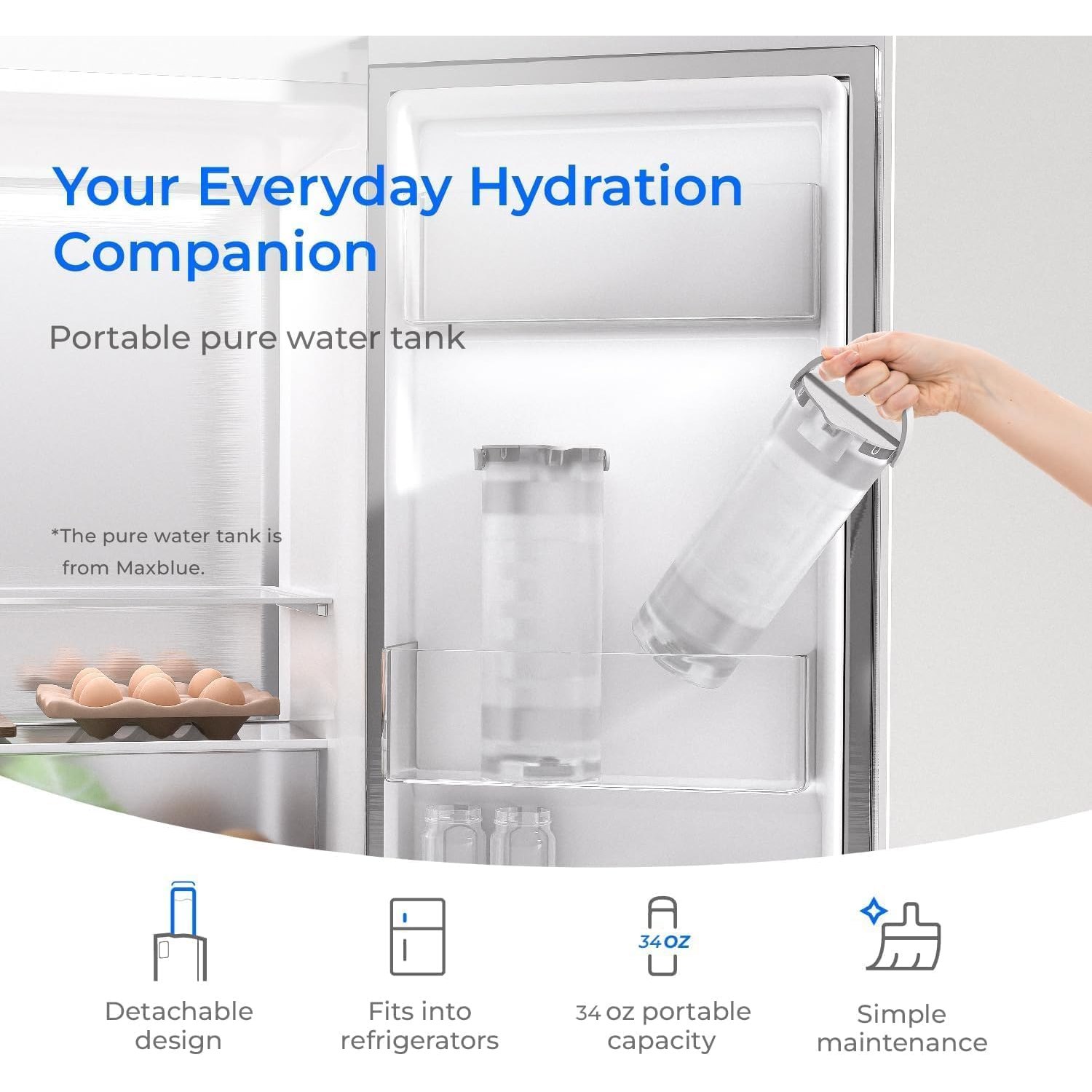
Wipe the outside with a soft damp cloth and dry it off. Wash the detachable pitcher and the feed tank with warm water and a little dish soap, then rinse thoroughly. The pitcher detaching is a genuine convenience here, you can actually get into it.
Do not leave water sitting in the feed tank for long stretches. If you are away for a week, tip it out and start fresh when you return.
Unplug before cleaning. Keep the unit upright, out of direct sun and away from the hob or any other heat source. When the screen says the filter is due, change it. Twist off, twist on, run the flush again.
The short version
This is a six-stage reverse osmosis system that sits on your bench and plugs into the wall. No plumber, no holes, no landlord conversation. The screen shows live TDS and filter life so you know where you stand, five volume settings mean you are not babysitting a pour, and the pitcher lifts out so filtered water can go to the table or the fridge.
It runs on drinkable mains water up to 500 ppm TDS, at room temperature, with a cartridge rated up to 12 months and a 3 to 1 pure-to-drain ratio. Measure your bench height, check your local TDS figure, and factor in replacement cartridges. If those three line up, you get reverse osmosis drinking water in a kitchen you never had to alter.